Email has become the default communication tool for most organisations. Important announcements, HR updates, company news and operational information are often sent to every employee with the expectation that everyone will read and act upon the message.
Unfortunately, that rarely happens.
Many organisations struggle with low email engagement, particularly when communicating with large workforces. Employees receive dozens, sometimes hundreds, of emails every week, making it increasingly difficult for important messages to stand out.
If your workforce regularly misses company announcements, health and safety reminders, policy updates or employee recognition messages, the problem may not be the content. It may be the communication channel itself.
In this guide, we’ll explore why employees ignore company emails and look at practical ways to improve message visibility across your organisation.
Why Company Emails Are Often Ignored
Email remains an important business tool, but it was never designed to be the only internal communication channel.
Today’s employees are overwhelmed with information. Every day they receive emails from colleagues, customers, suppliers, automated systems, newsletters and software platforms.
As inboxes become more crowded, internal communications compete for attention alongside urgent work tasks.
This often results in important messages being:
- Opened but forgotten
- Marked as read without being read properly
- Buried beneath newer emails
- Ignored completely
Even employees with the best intentions can miss valuable information simply because their inbox is overloaded.
Unfortunately, that rarely happens.
Many organisations struggle with low email engagement, particularly when communicating with large workforces. Employees receive dozens, sometimes hundreds, of emails every week, making it increasingly difficult for important messages to stand out.
If your workforce regularly misses company announcements, health and safety reminders, policy updates or employee recognition messages, the problem may not be the content. It may be the communication channel itself.
In this guide, we’ll explore why employees ignore company emails and look at practical ways to improve message visibility across your organisation.
Email Fatigue Is Real
Email fatigue occurs when employees receive more emails than they can realistically process.
Common symptoms include:
- Skimming messages rather than reading them
- Ignoring lengthy emails
- Deleting newsletters automatically
- Missing company announcements
- Failing to act on important requests
The more emails employees receive, the less attention each individual message receives.
This creates a significant challenge for HR teams, internal communications professionals and business leaders who rely on email to communicate important information.
Not Every Employee Sits Behind a Desk
For many organisations, a large proportion of employees spend little or no time at a computer.
Examples include:
- Manufacturing workers
- Warehouse staff
- Healthcare employees
- Retail teams
- Field engineers
- Facilities staff
- Hospitality workers
These employees may only access their inbox once per shift, or even less frequently.
Relying solely on email means many important updates simply aren’t seen when they matter most.
Information Gets Lost Over Time
Unlike conversations or visual reminders, emails quickly disappear down the inbox.
A company announcement sent on Monday morning may be impossible to find by Friday afternoon without searching through dozens of newer messages.
This is particularly problematic for information that employees need to remember throughout the week, such as:
- Health and safety reminders
- Employee wellbeing campaigns
- Company events
- Training deadlines
- Cyber security awareness
- Policy changes
Messages that remain visible are often more effective than those that disappear after being opened once.
Different Employees Prefer Different Communication Channels
Every workforce is different.
Some employees prefer email.
Others respond better to visual communication, short announcements or workplace displays.
An effective internal communication strategy uses multiple channels rather than relying on a single method.
This increases the likelihood that important information will reach everyone.
How to Improve Internal Communication Beyond Email
Rather than replacing email completely, organisations should think about supporting it with additional communication channels.
Some of the most effective options include:
Workplace Digital Signage
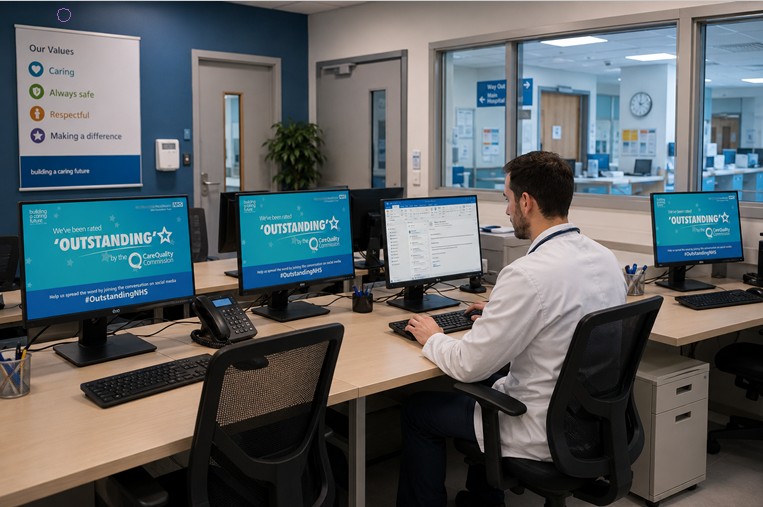
Digital signage allows organisations to display important announcements, KPIs, employee recognition and company news on screens throughout the workplace.
Because the information is highly visible, employees are more likely to notice updates during the working day.
This approach works particularly well in shared office spaces, reception areas, breakout rooms and manufacturing environments.
Corporate Screensavers
Many organisations overlook one of the simplest communication opportunities available: employees’ computer screens.
When a computer becomes inactive, the screensaver provides valuable space to reinforce important messages.
Instead of displaying a standard Windows screensaver, organisations can use corporate screensaver software to communicate:
- Company announcements
- Upcoming events
- Employee recognition
- Health and wellbeing campaigns
- Cyber security reminders
- Training opportunities
- Charity initiatives
- Internal vacancies
- IT maintenance notifications
Because employees see these messages multiple times throughout the working day, they become familiar without adding to inbox clutter.
If you’re looking for a simple way to improve message visibility, explore our employee screensaver software to see how organisations use centrally managed screensavers to support internal communication initiatives.
Employee Apps
For mobile workforces, employee apps provide another useful communication channel.
Push notifications can complement email by delivering urgent messages directly to employees’ phones.
Team Briefings
Face-to-face communication remains valuable, particularly for operational updates and team discussions.
Managers can reinforce company-wide communications during regular meetings to improve understanding and encourage feedback.

Common Messages That Work Well Outside Email
Many internal communications benefit from being displayed repeatedly throughout the working day.
Examples include:
Employee Recognition
Celebrating achievements helps improve morale and employee engagement.
Displaying recognition publicly allows colleagues to celebrate success together.
Health and Wellbeing Campaigns
Regular reminders encourage healthier workplace habits and reinforce wellbeing initiatives.
Cyber Security Awareness
Simple security reminders displayed frequently help employees develop better cyber security habits.
Company News
Sharing organisational updates helps employees feel connected to the wider business.
Training Opportunities
Visible reminders encourage employees to complete mandatory or optional training before deadlines.
Charity Events
Promoting fundraising activities across multiple communication channels helps increase participation.
Creating a Multi-Channel Communication Strategy
The most effective organisations combine several communication methods.
For example:
- Email for detailed information
- Team meetings for discussion
- Workplace displays for visibility
- Corporate screensavers for regular reminders
- Intranet for reference material
Each communication channel serves a different purpose while reinforcing the same key messages.
This creates greater consistency and significantly improves message reach.
Measuring Communication Success
Rather than simply measuring email open rates, organisations should monitor wider communication performance.
Useful measures include:
- Employee awareness
- Campaign participation
- Survey responses
- Training completion
- Event attendance
- Employee feedback
If awareness improves after introducing additional communication channels, the organisation is moving in the right direction.
Final Thoughts
Email continues to play an important role in workplace communication, but it should not be the only method organisations rely upon.
Employees are busier than ever, inboxes are increasingly crowded and many workers spend little time reading company emails during the working day.
Supporting email with visual communication channels helps important messages reach more employees, more consistently.
For office-based organisations, company screensaver software provides a simple yet highly effective way to keep internal communications visible throughout the day. From employee recognition and company news to cyber security reminders and wellbeing campaigns, centrally managed screensavers help reinforce messages without adding to inbox overload.
Learn more about Sabercom’s corporate screensaver solution and discover how it can help improve communication across your organisation:
Frequently Asked Questions
Why do employees ignore company emails?
The most common reasons include inbox overload, email fatigue, competing priorities and relying on email as the only communication channel.
Is email still effective for internal communication?
Yes, but it works best when supported by additional communication methods such as digital signage, corporate screensavers, team briefings and employee apps.
What can organisations use instead of email?
Organisations often combine email with workplace digital signage, employee apps, intranets, corporate screensavers and face-to-face communication to improve message visibility.
How can corporate screensavers improve internal communication?
Corporate screensavers display important information whenever an employee’s computer becomes inactive, helping reinforce key messages throughout the working day without contributing to email overload.